AUTOCOMP CORP / AUTONOMOUS COMPLIANCE OPERATIONS & EVIDENCE CAPTURE
Audit readiness that updates itself.
Authority stays human.
AutoComp continuously captures control evidence, maps it to compliance requirements, records an explainable audit trail, and routes consequential decisions to the right human reviewer across SOC 2, HIPAA, ISO 27001, and evolving internal control programs.
EVIDENCE CAPTURECONTINUOUSCONTROL MAPPINGTRACEABLEEXECUTIONHUMAN-GATED
COMPLIANCE OPERATING STATEContinuous evidence / human-controlled execution
DESIGNED FOR AUDITABLE CONTROL ENVIRONMENTS
SOC 2HIPAAISO 27001Evidence provenanceHuman approval gates
01 / LIVE AUDIT DASHBOARD
See evidence arrive before the auditor asks for it.
An interactive product preview of continuous evidence capture, framework posture, exception queues, and append-only audit logging. The data shown below is a simulated AutoComp workspace—not a claim about a live customer environment.
SOC 295%
HIPAA89%
ISO 2700192%
REAL-TIME EVIDENCEEvidence ingestion
STREAMINGAWS IAMPrivileged-role inventory reconciled
CC6.1VerifiedPolicy LibrarySecurity policy version hash matched
A.5.1VerifiedVendor RegisterCritical vendor review packet updated
CC9.2ReviewEndpoint FleetEncryption posture snapshot stored
A.8.1VerifiedHRISAccess-review roster synchronized
A.6.1CapturedAUDIT TRAILRecent system events
IMMUTABLEEvidence hash sealed
Control test completed
Reviewer queue updated
Source snapshot versioned
CHAIN INTEGRITYVerifiedAll displayed events are part of this interactive product mockup.
02 / HUMAN-IN-THE-LOOP CONTROL
Autonomous evidence work. Explicit human authority.
AutoComp can observe, reconcile, classify, draft, and route. Signatures, filings, material exceptions, and other consequential actions remain permissioned so the audit trail shows exactly where machine work ended and accountable human judgment began.
HUMAN CONTROL GATE
Human requiredReview consequential decisions
A designated officer, compliance lead, or qualified professional reviews exceptions, signatures, filings, and material policy decisions.
CONTROL MODEHuman required
DECISION PROFILEConsequential
TRACEABILITYSource + rule + reviewer
Human signature authority stays outside the agent.AutoComp can prepare, route, and record. It does not silently assume officer or professional authority.
03 / COMPLIANCE ROI MODEL
Estimate how much audit preparation can move out of spreadsheets and inboxes.
Adjust organization size and target frameworks to model the workload that can potentially be reclaimed through automated evidence collection, reconciliation, and audit preparation. The calculator states its assumptions so the estimate stays transparent.
PLANNING INPUTSModel your compliance workload
Target frameworks / certifications
Illustrative model assumptions
Uses a planning estimate of 110 fixed audit-preparation hours per framework plus 1.6 hours per employee, with 58% of that workload modeled as automatable evidence collection, reconciliation, and audit preparation.
Not a guarantee of savings. Actual effort varies by scope, maturity, auditor, systems, and control environment.MODELED IMPACTSOC 2 + ISO 27001
Potential annual audit hours reclaimed592hours / year
The highest-value savings come from removing repetitive evidence chasing while keeping approvals and consequential decisions with accountable humans.
04 / CONTROL PLANE
Switch the system from observation to approval without hiding the handoff.
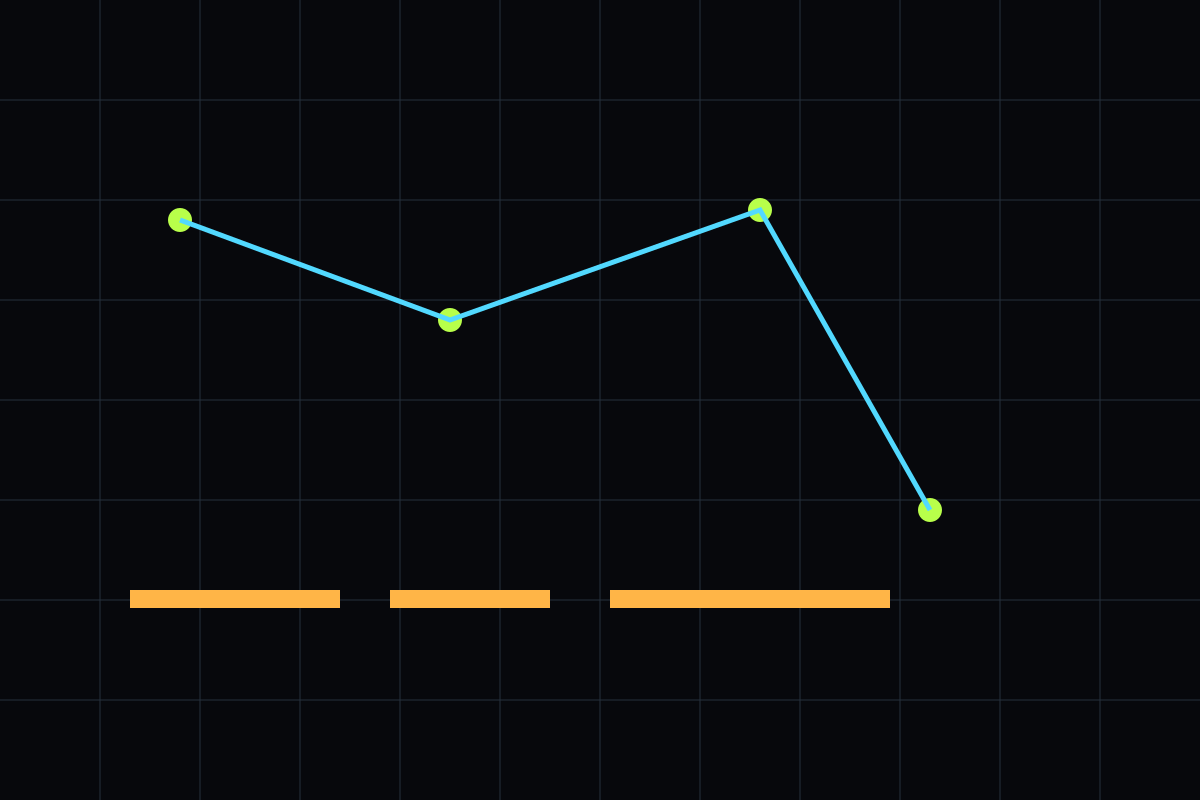
SOURCE STATE / VERSIONED
Registry Sentinel
Watch source changes, due dates, status shifts, and evidence without turning every signal into an automatic action.
Human authority stays explicit
05 / OPERATING LIFECYCLE
One operating layer between obligation and execution.
DIAGNOSTIC TERMINALLIVE
94% confidence
Classify the event against entity scope, jurisdiction, deadlines, and known obligations with confidence scoring.
- source
- entity scope
- event
- obligation candidate
- trace
- CLS-4401 / policy 7
STATE / SOURCE COVERAGE
Every registry node carries its own version, freshness, and evidence state.
STATE REGISTRY MONITORSix source nodes / versioned evidence
SIMULATED CONTROL PLANE06 / AGENT MESH
Specialists that disagree before the system acts.
Registry Sentinel
Monitors filing sources and provider evidence for changes, deadlines, and mismatches.
Never treats a missing source as proof of compliance.Records Steward
Reconciles corporate records, approvals, entity relationships, and document versions.
Drafts from verified facts only.Risk Classifier
Scores ambiguity, consequence, jurisdiction complexity, and stale-data exposure.
High-consequence uncertainty forces escalation.Execution Router
Routes approved actions to officers, registered agents, filing services, or counsel.
Cannot self-authorize formal execution.07 / EVIDENCE & GOVERNANCE
Corporate records should show how a decision was made—not just that a file exists.
AutoComp links source evidence, rule versions, generated drafts, approvals, and execution events so a human reviewer can reconstruct the operational history.
APPEND-ONLY EVENT CHAINVERSIONED SOURCE EVIDENCEEXPLICIT HUMAN AUTHORITY
Agent classificationmaterial change
Risk Classifier marks the event as governance-relevant and routes it above autonomous drafting threshold.
confidence94%
- evidence id
- CLS-4401
- content hash
- d0a6…77be
- version time
- 22:01:14
- chain state
- APPEND ONLY
SOURCE VERIFIEDNORMALIZED / v4.8.2CLASSIFIER / 94%HUMAN GATE / APPROVAL REQUIREDAUDIT / a48b…0e72
08 / CONTROL LEVELS
Autonomy has boundaries.
Observe automatically
Read public or authorized sources, normalize events, and create internal evidence without changing external records.
Draft automatically
Prepare routine corporate artifacts from approved templates when source facts and scope are verified.
Require approval
Any filing, signature, payment, officer action, or state-record change requires an authorized execution path.
Require professional review
Ambiguous legal classification, foreign qualification, disputes, enforcement matters, or material governance changes route to qualified counsel.
09 / READINESS
Start readiness checkMap the control environment before automating it.
Start with entity scope, frameworks, source quality, evidence readiness, approval authority, and the decisions that must stay human-controlled.